
Faithful fields · kilcormac · Co. Offaly
Knee Pain Treatment & Rehab
Expert knee assessment, treatment and rehabilitation at Offaly Physio & Performance Lab — from everyday pain to elite sport.
Faithful fields · kilcormac · Co. Offaly
Expert knee assessment, treatment and rehabilitation at Offaly Physio & Performance Lab — from everyday pain to elite sport.
At Offaly Physio & Performance Lab, we provide comprehensive assessment, treatment and rehabilitation for all forms of knee pain. The knee is a complex joint, subject to both traumatic injury — such as meniscal and ligament tears sustained in sport — and gradual wear-and-tear, including osteoarthritis and tendinopathy.
Because knee pain can arise from the joint itself, the tendons and ligaments around it, or from biomechanical issues at the hip and foot, accurate diagnosis is essential.
Our approach combines hands-on treatment, exercise rehabilitation and, where appropriate, adjunct therapies such as shockwave therapy, injection therapy and clinical pilates. We do not simply treat the painful area — we aim to identify the factors contributing to your knee pain and develop a tailored plan to help you return to the activities that matter to you, whether that is walking, running, sport or work.
Six of the most common causes of knee pain — each matched with its own evidence-based treatment pathway.
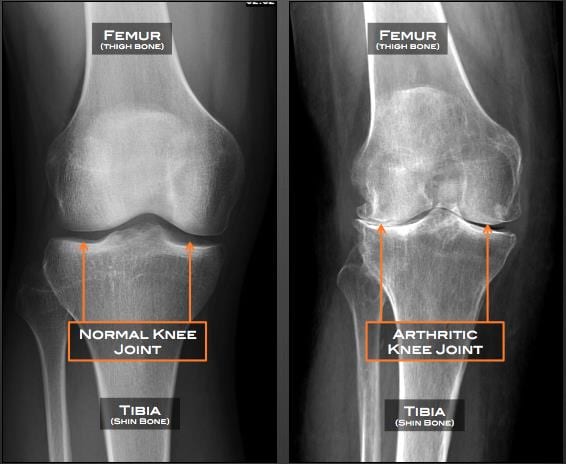
Knee osteoarthritis is a degenerative condition characterised by progressive wear of the articular cartilage within the joint. As the cartilage thins and the joint space narrows, patients typically experience pain, stiffness, swelling and a gradual reduction in function. It is most common in older adults, but can occur earlier following a previous knee injury such as a meniscus tear or ligament rupture. Symptoms often fluctuate, with flare-ups alternating with more settled phases.
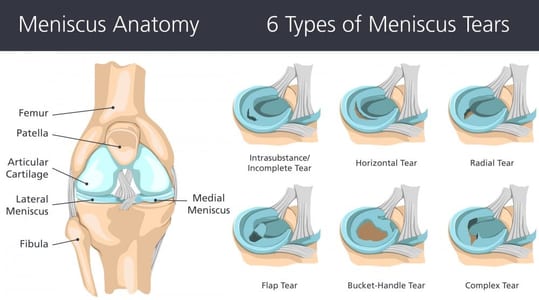
The meniscus is a crescent-shaped cartilage that cushions and stabilises the knee. Meniscal injuries can be traumatic — often caused by a twisting force on a weight-bearing knee — or degenerative, developing gradually with age and repeated loading. A torn meniscus can cause pain, swelling, clicking or locking, and a sensation of giving way.
Ligament injuries involve one of the four major knee ligaments: the ACL, PCL, MCL or LCL. These are common in sport, often from sudden twisting, pivoting or direct contact. ACL injuries in particular can significantly affect knee stability and may require structured rehabilitation or, in some cases, surgical reconstruction.
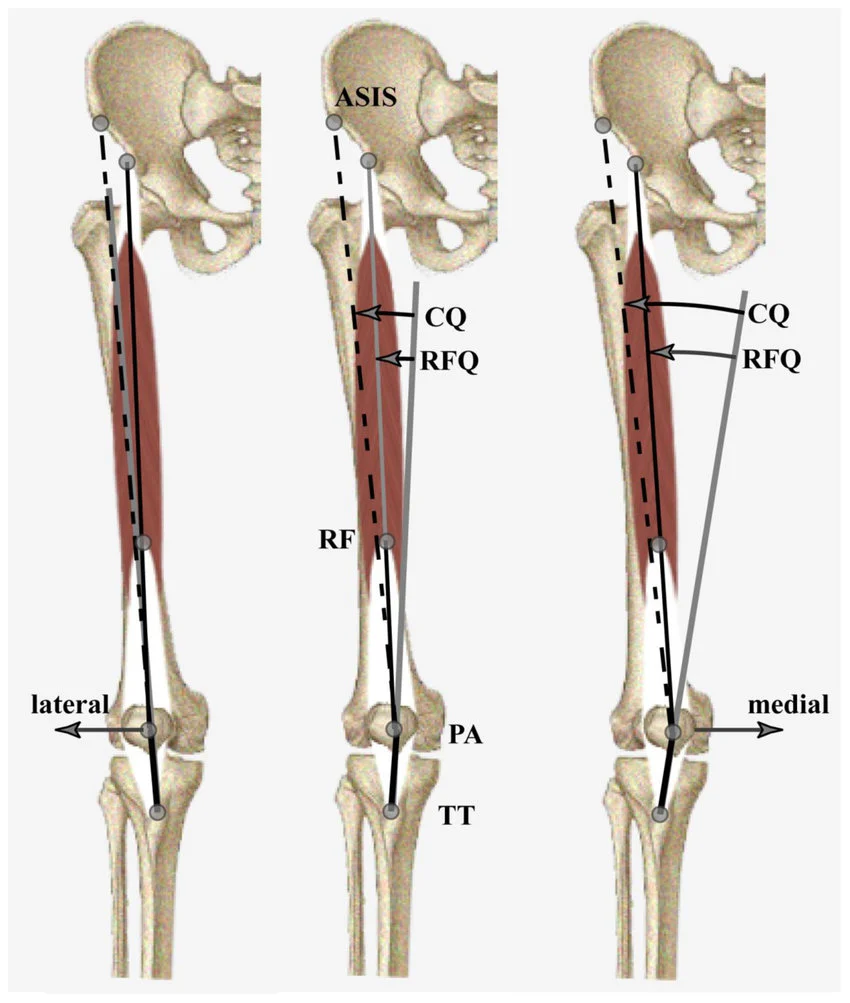
Patellofemoral pain refers to pain around or behind the kneecap, often related to how the patella tracks within the femoral groove as the knee bends and straightens. While it may feel like the kneecap itself is the problem, the underlying cause frequently lies elsewhere in the lower limb.
Research by Powers has shown that patellofemoral kinematics are strongly influenced by femoral rotation and hip control — in essence, the patella is a passenger, its tracking determined by the femur beneath it. When the femur rotates inward or the knee collapses into valgus, the patella is pulled laterally, increasing contact stress and pain. That is why we address hip control, femoral rotation and overall lower-limb biomechanics rather than focusing exclusively on the knee.
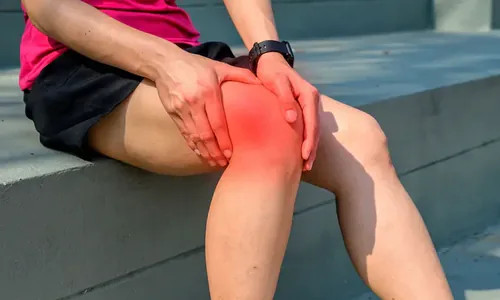
ITB syndrome is a common cause of pain on the outside of the knee, particularly in runners and cyclists. The iliotibial band is a thick band of fascia running down the outside of the thigh; as the knee bends and straightens it passes over the lateral femoral condyle. When compressive forces are excessive, irritation and pain develop at this point.
ITB syndrome is frequently related to training load errors — such as a rapid increase in running mileage — as well as biomechanical factors including hip control, foot posture and running technique. Like compressive tendinopathy, repeated compression rather than simple friction is thought to be the primary pain mechanism.
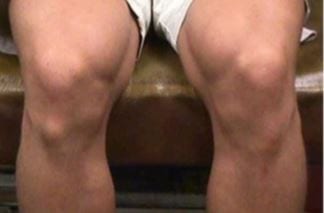
Osgood Schlatter disease is a common cause of knee pain in young athletes during periods of rapid growth, typically between the ages of 9 and 16 — most often in running, jumping and change-of-direction sports. Pain is felt at the tibial tuberosity, the bony bump just below the knee, and is often tender to touch, worsened by activity and relieved by rest.
During a growth spurt the bone grows faster than the tendon can adapt, and the repeated pull of the quadriceps through the patella tendon on the immature growth plate produces a traction injury — a traction apophysitis. Importantly, it is self-limiting: it resolves once the growth plate fuses. Our role is to help young athletes manage symptoms while remaining as active as possible.
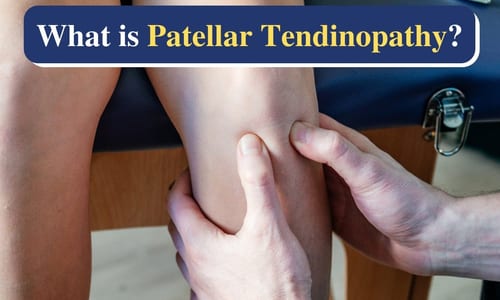
Patella tendinopathy — often called jumper's knee — is a tendinopathy of the patella tendon, the strong tendon connecting the kneecap to the tibia. It is common in sports involving repetitive jumping and loading, such as basketball, volleyball, athletics and dancing. Patients typically experience pain at the lower pole of the patella, worsening with jumping, squatting and stairs.
It follows the tendinopathy continuum, progressing through reactive, dysrepair and degenerative stages depending on the load applied to the tendon. The patella tendon is subject to very high loads during jumping and change of direction, so capacity must be rebuilt progressively.
We take an integrated approach to knee pain, matching each presentation with the most appropriate combination of treatments.
Joint mobilisations, exercise therapy, shockwave therapy as an adjunct, and injection therapy where appropriate.
Hands-on treatment, exercise rehabilitation and graded return-to-sport, with objective performance testing and surgical referral where needed.
Taping, hip and core exercise therapy, motor control retraining and Clinical Pilates as part of the motor control approach.
Load modification, biomechanical correction of hip control and foot posture, and progressive strengthening of tissue capacity.
Load modification and relative rest in flare-ups, progressive tendon loading, education — and shockwave as an adjunct.
Progressive tendon loading, load management, biomechanical correction and shockwave therapy to support healing and pain relief.
Your knee pain journey at Offaly Physio & Performance Lab, step by step.
A thorough assessment of the knee, hip and foot to establish exactly where your pain is coming from and why.
A clear diagnosis and a tailored plan built around the activities that matter to you — walking, running, sport or work.
Joint mobilisations, soft tissue work, taping and progressive exercise therapy — plus shockwave or injection therapy where appropriate.
Graded return-to-activity with objective progress checks, so you get back to what you love — and stay there.
Whether your knee pain is from osteoarthritis, a meniscus or ligament injury, patella tracking issues, ITB syndrome, Osgood Schlatter disease or patella tendinopathy — our experienced physiotherapists can help. Comprehensive assessment, treatment and rehabilitation from our clinic in Tullamore, Co. Offaly.