
Hip & Groin Rehab
Specialist assessment and rehabilitation for hip and groin pain at Offaly Physio & Performance Lab — a whole systems approach, with specific protocols to guide a successful return to play.
Specialist assessment and rehabilitation for hip and groin pain at Offaly Physio & Performance Lab — a whole systems approach, with specific protocols to guide a successful return to play.
Hip and groin pain is one of the most frustrating injuries in field sport — it rarely has a single cause, and it rarely settles with a generic programme. At Offaly Physio & Performance Lab we use a whole systems approach: structured protocols, objective profiling and specific criteria to guide a successful return to play. Crucially, we treat what we find — restoring joint mobility, rebuilding control, developing muscle strength systems and movement patterns, and progressing the athlete through the exact demands of their sport until they are robust enough to return — better than before.
Below we outline the key things we assess and treat, starting with the three most common presentations we see in field-sport athletes.
Every athlete is assessed the same way: find the driver, treat what we find, re-test, and progress only when criteria are met. No stage is time-dependent — progression is earned through objective markers.
Find the driver — history, palpation, strength & movement
Restore joint mobility (mobilisations, range work) · Rebuild control (trunk, hip-pelvic, intersegmental) · Develop strength systems (adductors, glutes, trunk, power & rate of force development)
Run, cut, kick, jump, accelerate, decelerate — coached at speed
Ready to return, staying returned
Re-test at every stage — progress on objective criteria, not the calendar
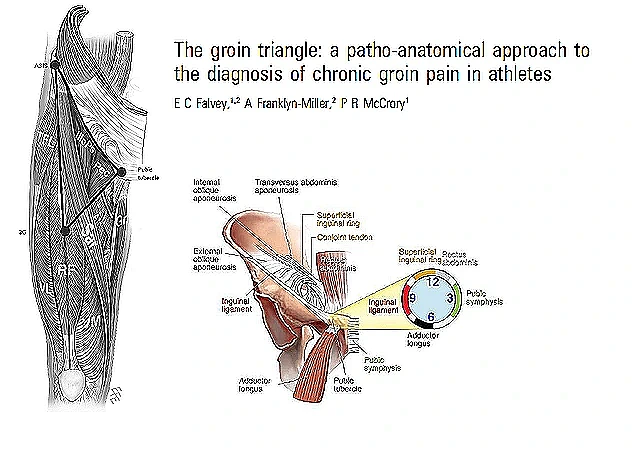
Osteitis pubis is a stress reaction of the pubic symphysis and surrounding bone — the classic overload injury of sports involving repeated kicking, twisting and change of direction. To understand it, you have to understand the pubic triangle: the region bounded above by the rectus abdominis, below by the adductor longus (with gracilis), and centred on the pubic symphysis. Crucially, these tendons attach in continuity through a common aponeurosis that blends with the symphyseal fibrocartilage — so forces from the abdominal wall on one side and the thigh adductors on the other cross the pelvis and meet at the same point.
Trunk flexion & anti-extension forces
Kicking, cutting & change-of-direction forces
Common aponeurosis over the symphysis — abdominal wall + adductors + symphysis, all loading one junction. Opposing force couples cross the midline and converge on the pubic symphysis.
Bone marrow oedema · secondary cleft sign · adductor microtears → symphyseal inflammation
When the load through this triangle repeatedly exceeds what the bone and tendon junction can tolerate, the adductor enthesis usually breaks down first — microtearing at its attachment. The symphysis is then left unstable, and secondary inflammation within the bone — the osteitis pubis — follows. This is why we never just treat "the sore bone": we restore hip range, rebalance the abdominal and adductor force couples, and correct the movement patterns driving the overload.
Every stage planned around where the athlete needs to get to — high-speed running, cutting & return to sport
Assess how trunk, pelvis, hip & lower limb work together — the whole kinetic chain, not just the labelled structure. Find the strategies driving symptoms.
Beyond local strengthening — progressively restore running mechanics, acceleration, deceleration & change-of-direction capacity. Rehabilitation that transfers to sport.
Progress on meaningful markers, not time alone: pain · range of motion · strength · movement quality · load tolerance · progressively more demanding tasks.
Movement mechanics, strength & load tolerance restored for the demands of the game. Every stage re-tested — criteria-based, not calendar-based progression.
This research underpins our osteitis pubis pathway: unload and settle the irritability, restore what we find missing, then rebuild the running and cutting mechanics — rather than chasing the MRI.
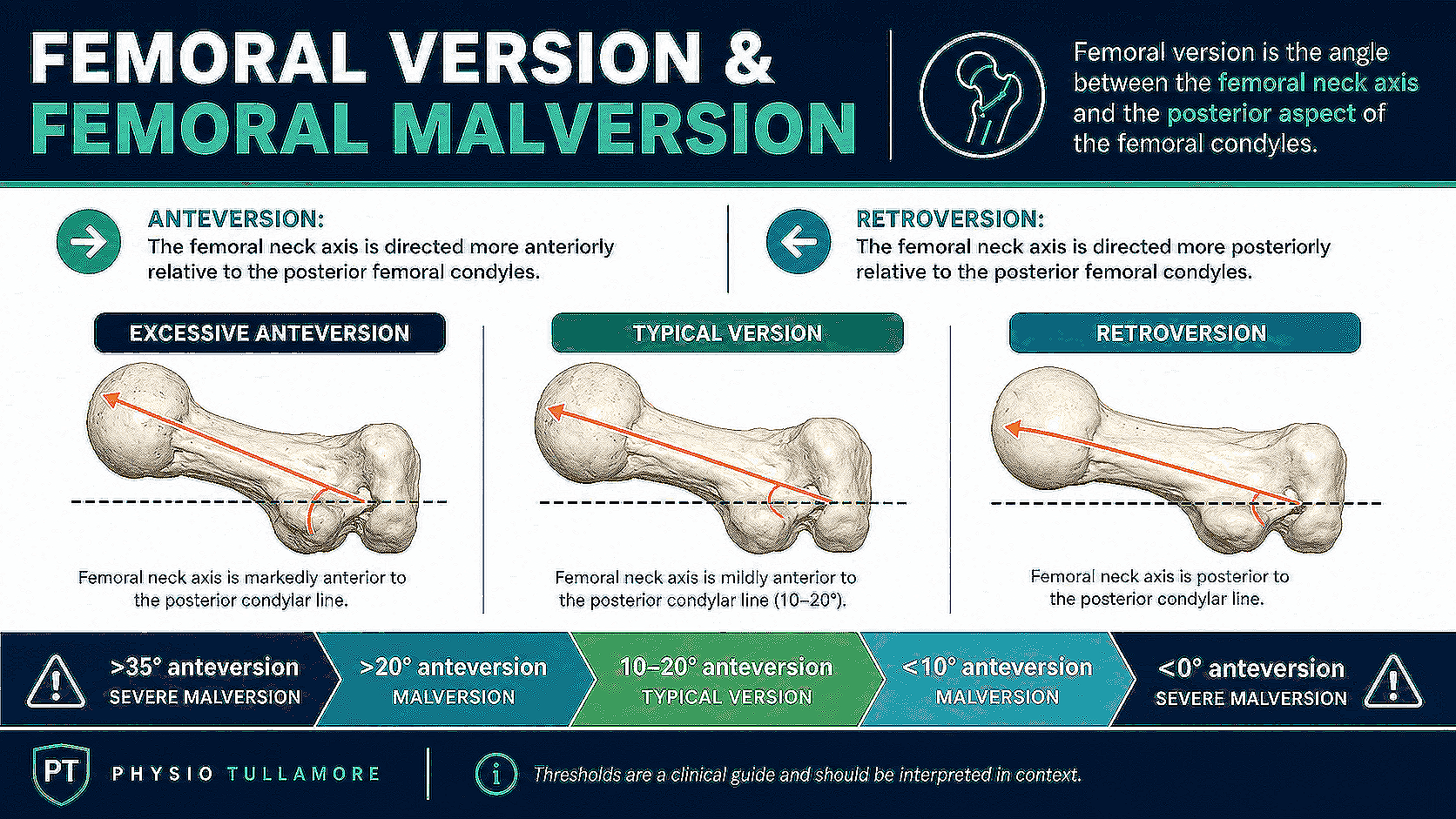
Femoroacetabular impingement (FAI) is a mechanical problem of shape: the ball, the socket, and how they move relative to each other. Three anatomical factors dictate the issues an athlete experiences:
Why field sports? Football, rugby and GAA demand thousands of kicks, cuts and decelerations during exactly the years the hip is still maturing. That chronic load across the open growth plate is the key driver of cam development in adolescent athletes — and is why morphological changes are so common in elite soccer players.
You can't change the shape — but you can change what surrounds it. Our assessment identifies your version, pelvic strategy and impingement zone, then we restore what we find: capsular and muscular mobility, pelvic control, and strength systems that reduce the reliance on end-of-range bony blocks during kicking and cutting.
Groin injury is one of the biggest availability problems in professional football. The long-running UEFA Elite Club Injury Study — tracking dozens of top European clubs over 15 seasons — and whole-league studies from the Qatar Stars League give us a clear picture:
players lose time to groin pain every season
adductor injuries per 1000 hours of training & match play
of all groin injuries are adductor-related
groin problems with the Copenhagen adductor strengthening programme
Kicking and change of direction are the dominant mechanisms — a forceful eccentric load through the adductor longus as the hip abducts, extends and externally rotates. MRI-based classification (Serner et al.) shows recovery is grade-dependent: clinical return is often possible in around two weeks for low-grade injuries, full team training averages about a month, and grade 3 injuries (rupture or avulsion) can take up to three months. Structured, milestone-based rehabilitation — not rest and hope — is what protects that timeline.
Our groin strain protocol follows the evidence: early progressive loading of the adductor complex, objective strength profiling (adduction : abduction ratio, NordBord and ForceFrame), and graded re-introduction of kicking and cutting before clearance.
We treat what we find. Restriction in the hip capsule, thoracic spine or pelvis changes how load is transferred through the pubic triangle and the hip joint — so we restore it directly.
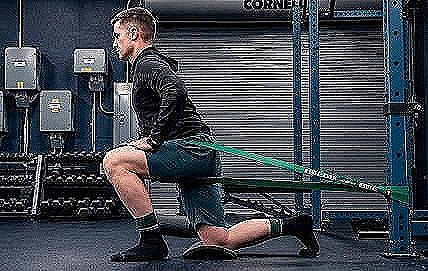
Peripheral joints (the hip itself) and global joints (pelvis, thoracic spine, ankle) affect the whole system. The clinic uses clinical treatments including joint mobilisations to restore range of movement, ensuring the full kinetic chain has the mobility it needs. Where spinal contributions are identified, spinal rehabilitation is integrated into the programme.
Every athlete is profiled — creating a rounded picture of how they express force, where their asymmetries sit, and what their movement is doing to the hip and groin under load.
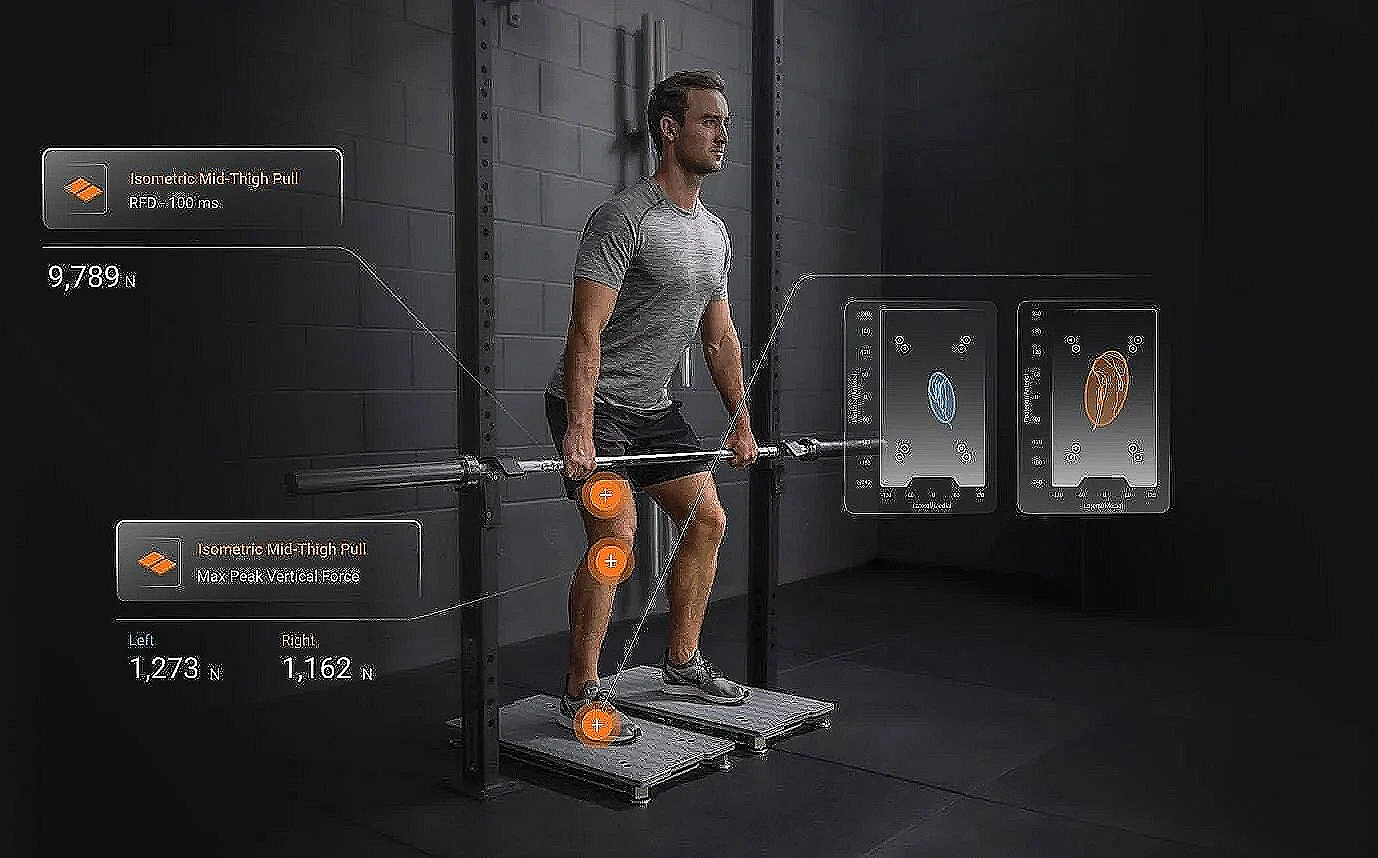
Structured strength & conditioning, load monitoring, bar-speed profiling with velocity-based training, and in-depth movement coaching run throughout — developing the muscle strength systems and movement patterns that make an athlete robust, not just pain-free.
Once strength and asymmetry criteria are met, the focus switches to how the athlete actually moves — running, cutting, kicking, accelerating and decelerating. We analyse it, coach it, and re-test it.
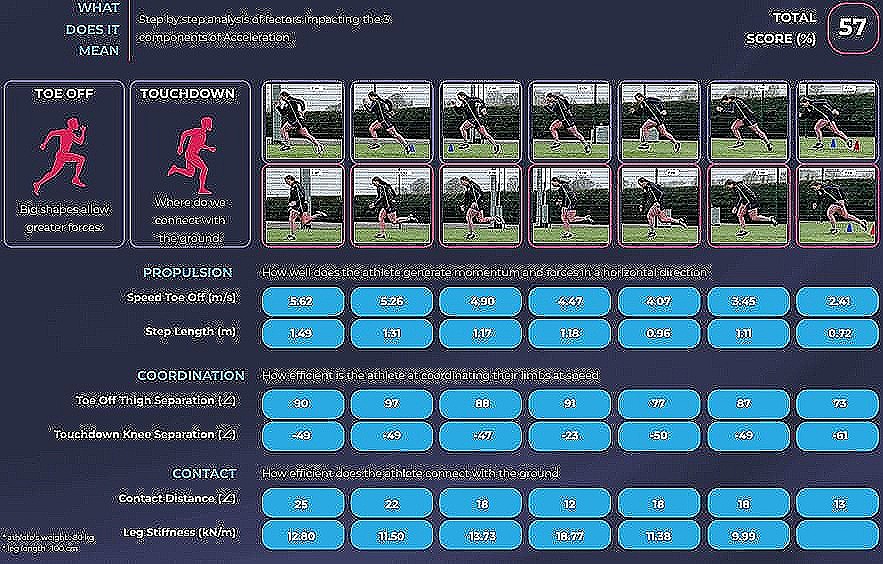
You leave with all of your data — every score, every comparison, every stage of the pathway — so you can see exactly what you have restored and why you are ready to return.
Objective technology guides every decision across the hip and groin pathway.
Isometric strength testing of the adductors, abductors, hip flexors and extensors across multiple joint angles — objective limb symmetry data and adductor-to-abductor ratios to guide progression.
Dual force plate system for jump testing — countermovement jump, single-leg CMJ and drop jumps — measuring peak power, reactive strength index and inter-limb asymmetry.
Detailed analysis of running, cutting, kicking and change of direction — identifying the movement errors and intersegmental control deficits that drive hip and groin overload.
Bar-speed monitoring to train at the right velocity for strength and power, plus sprint and change-of-direction timing to track readiness for return to play.
It varies with how long the overload has been building, but most athletes follow a staged pathway of several months: unloading and settling the irritability first, then restoring mobility, control and strength, before a graded return to kicking and running. Progression is gated on objective markers — not the calendar.
The region bounded above by rectus abdominis, below by adductor longus (with gracilis), and centred on the pubic symphysis. These tendons attach in continuity through a common aponeurosis, so forces from the abdominal wall and the thigh adductors converge on the same junction — which is why overload there produces osteitis pubis.
Often, yes. You can't change the bony shape, but you can change what surrounds it: capsular and muscular mobility, pelvic control, and strength systems that reduce reliance on the end-of-range bony block during kicking and cutting. Many athletes manage very well without surgery.
Football, rugby and GAA demand thousands of kicks, cuts and decelerations during the years the hip is still maturing. That chronic load across the open growth plate is the key driver of cam development in adolescent athletes.
It depends on the grade. Low-grade injuries often allow clinical return in around two weeks, full team training averages about a month, and grade 3 injuries (rupture or avulsion) can take up to three months. Structured, milestone-based rehabilitation is what protects that timeline.
Assess to find the driver, treat what we find — mobility, control, strength systems and movement patterns — and re-test at every stage, progressing only when objective criteria are met, until the athlete is robust enough for the exact demands of their sport.
Whether you are managing osteitis pubis, CAM impingement or a recurrent groin strain, our clinic provides structured, data-driven hip and groin rehabilitation for athletes and active individuals across Offaly and the Midlands. Contact us to book a consultation and start rebuilding towards return to performance.